Here is a detailed introduction from five aspects: working principle, structural features, application scenarios, advantages, as well as operation and maintenance.
Working Principle:
The bubble cleaning machine achieves cleaning through the following three mechanisms:
1. Bubble Tumbling System
- An aeration pipe or microporous aeration disc is installed at the bottom of the equipment. A blower injects high-pressure air to generate a large number of fine bubbles (up to 2000 or more per second).
- As the bubbles rise, they create a vortex that makes materials continuously tumble in the water, stripping off surface attachments such as mud, pesticide residues and impurities.
2. Water Flow Washing System
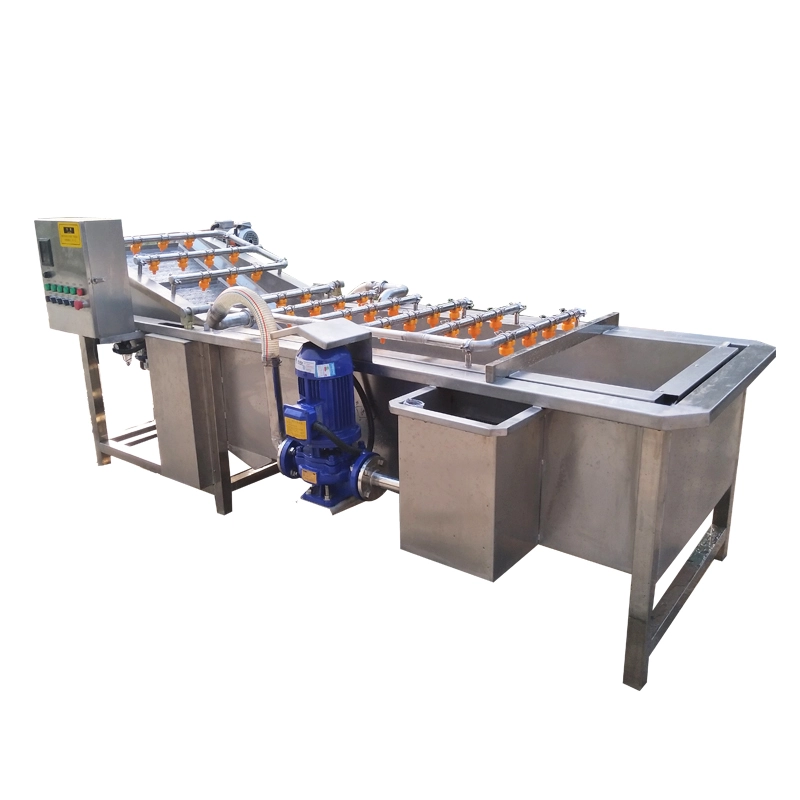
- A circulating water pump generates a high-pressure vortex to enhance the rinsing force, which thoroughly removes dirt together with the bubbles.
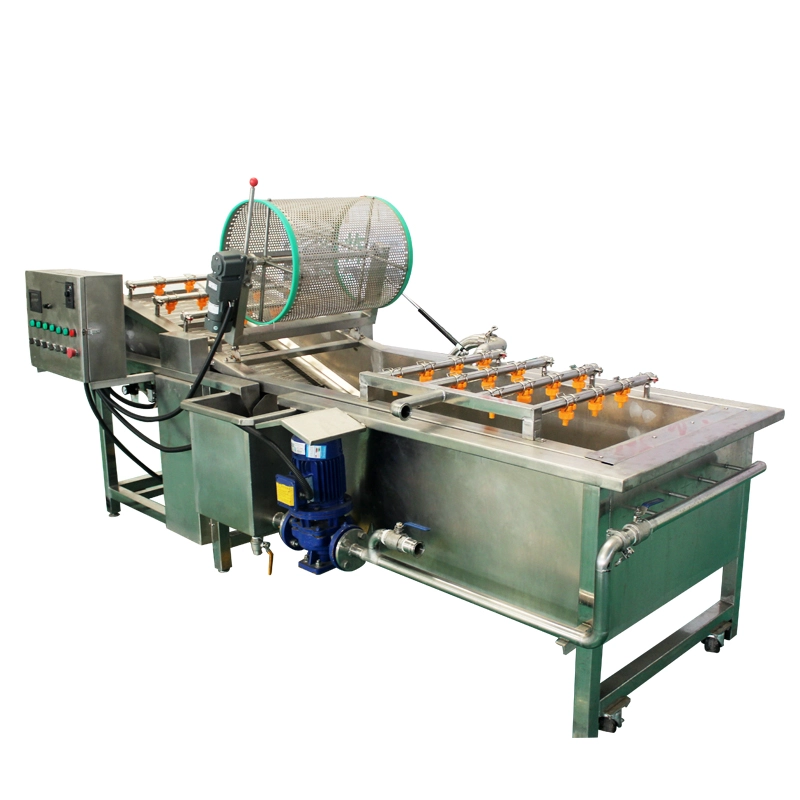
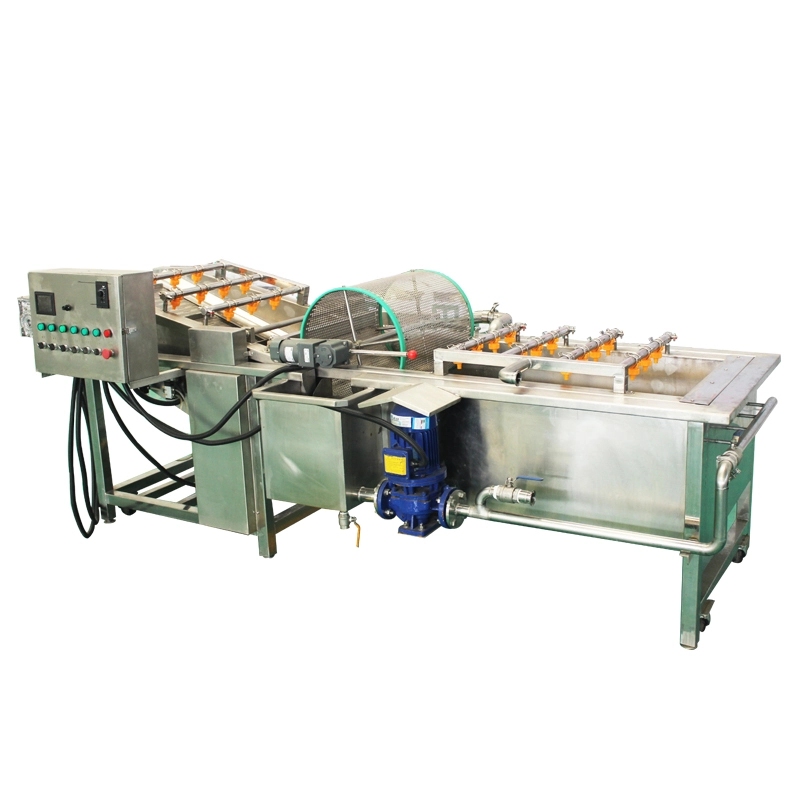
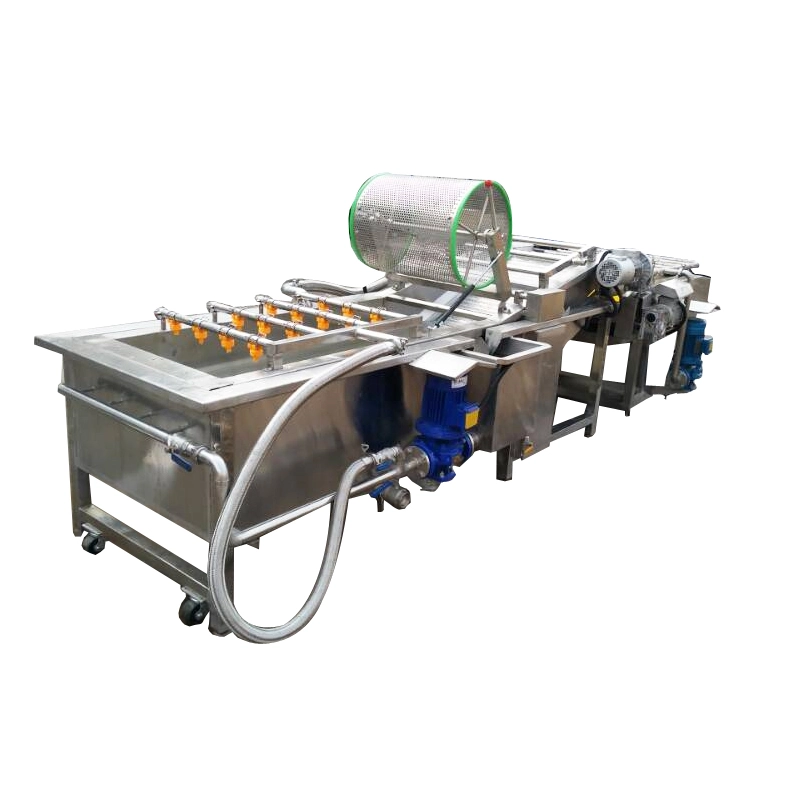
- Some models are equipped with brush rollers to help eliminate stubborn stains such as fibrous debris and dirt on roots and stems.
3. Spraying and Filtration System
- A high-pressure spraying device is installed at the discharge end to perform secondary rinsing of materials and ensure thorough cleanliness.
- Mud and sand settle in the bottom isolation chamber, while floating impurities are discharged through an overflow channel, effectively preventing secondary contamination.
Structural Features:
1. Main Components
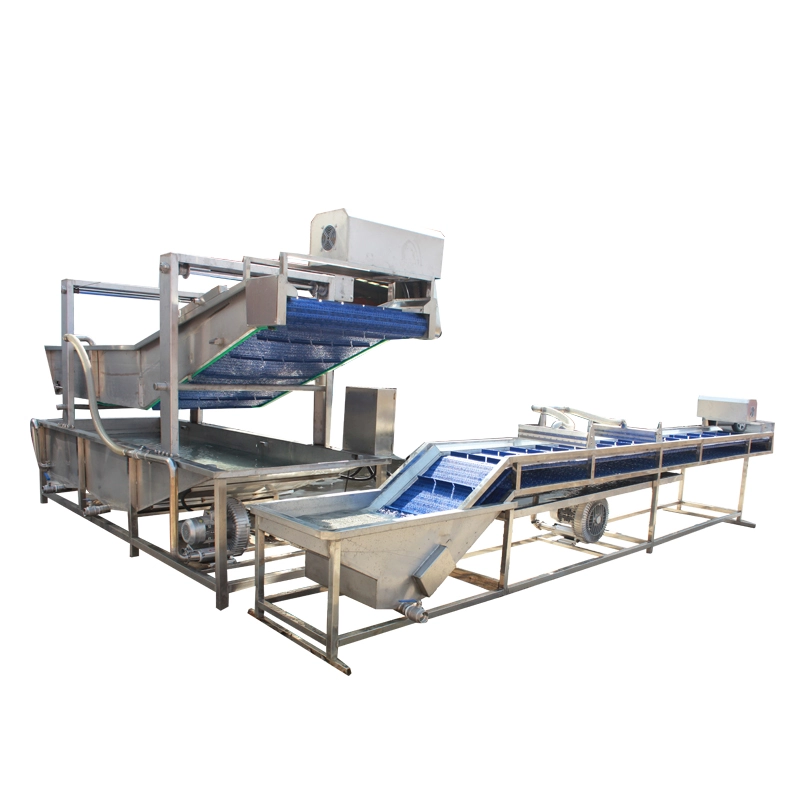
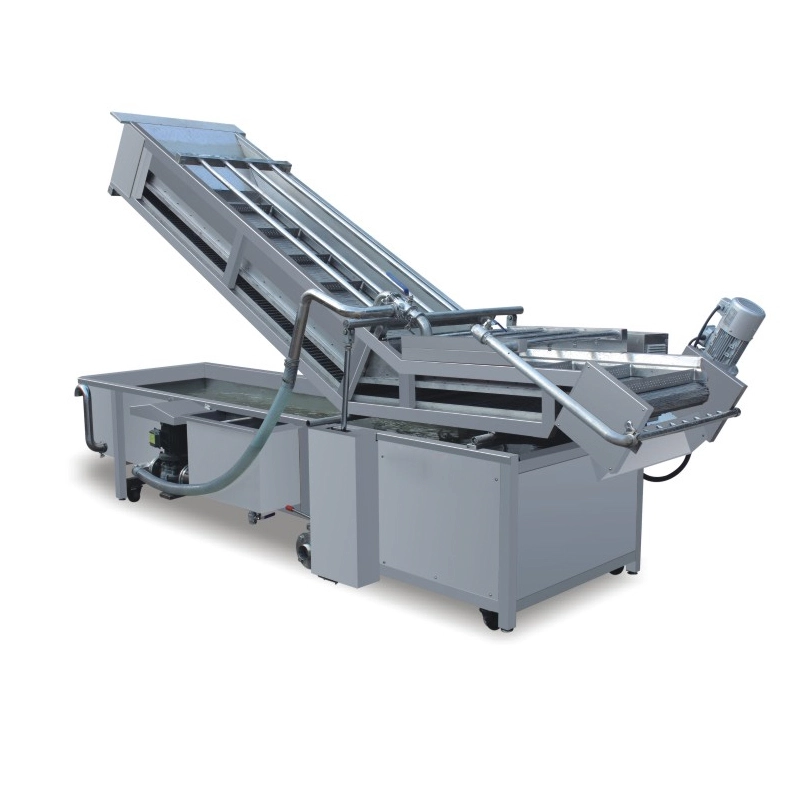
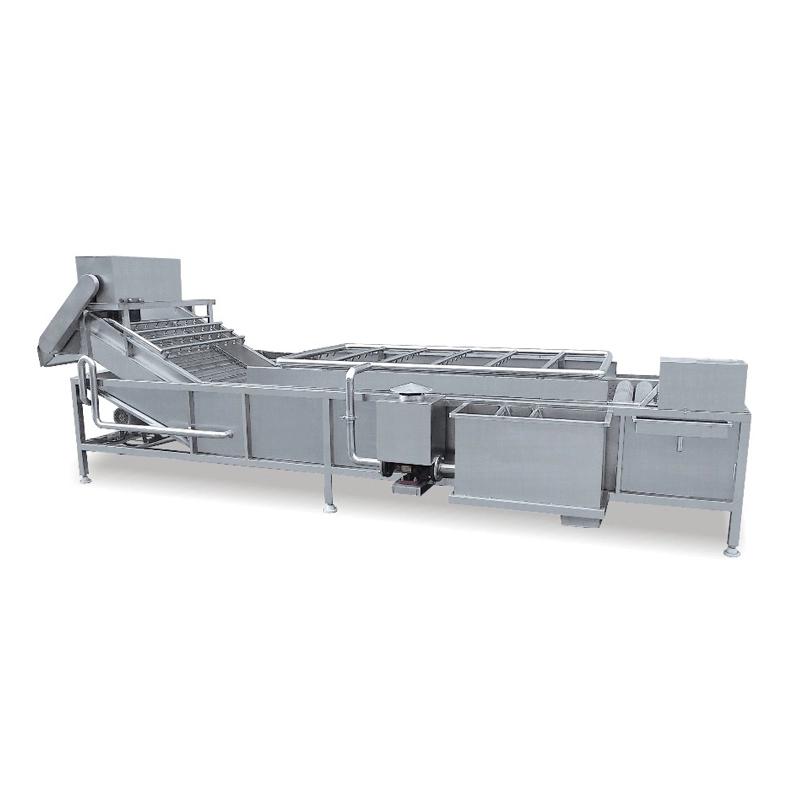
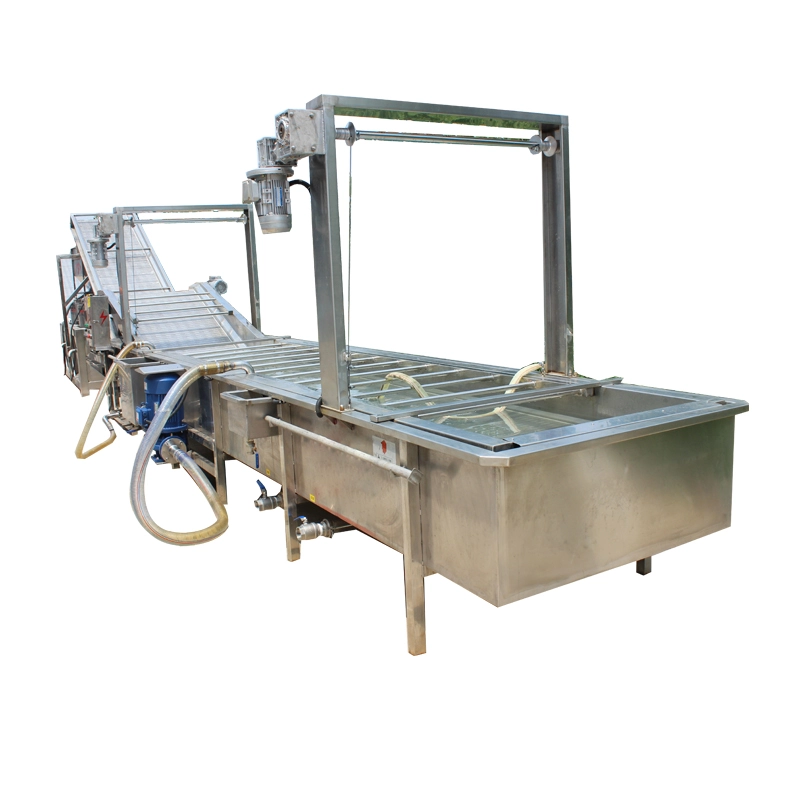
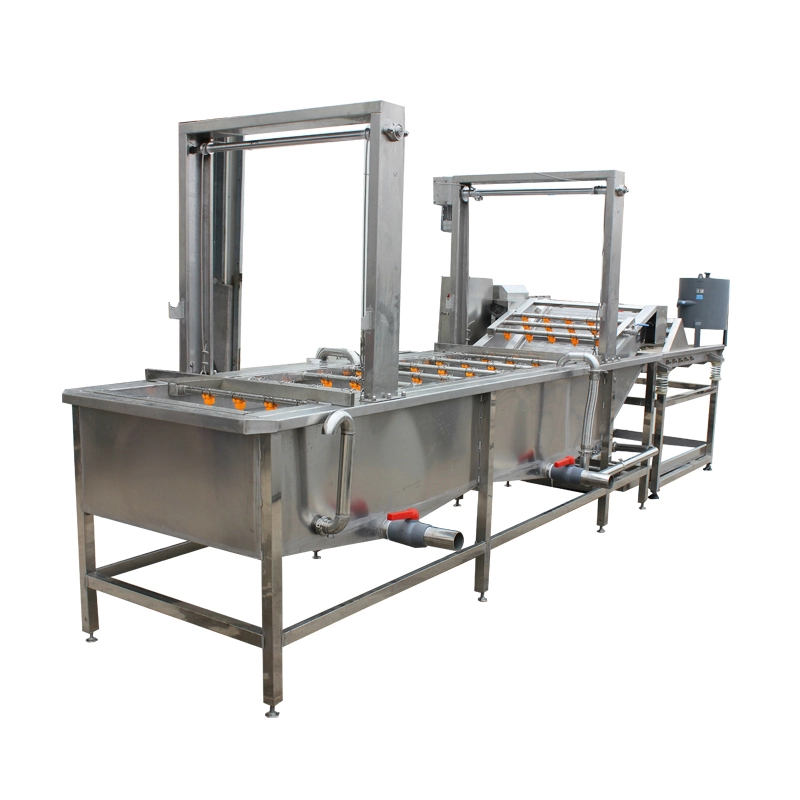
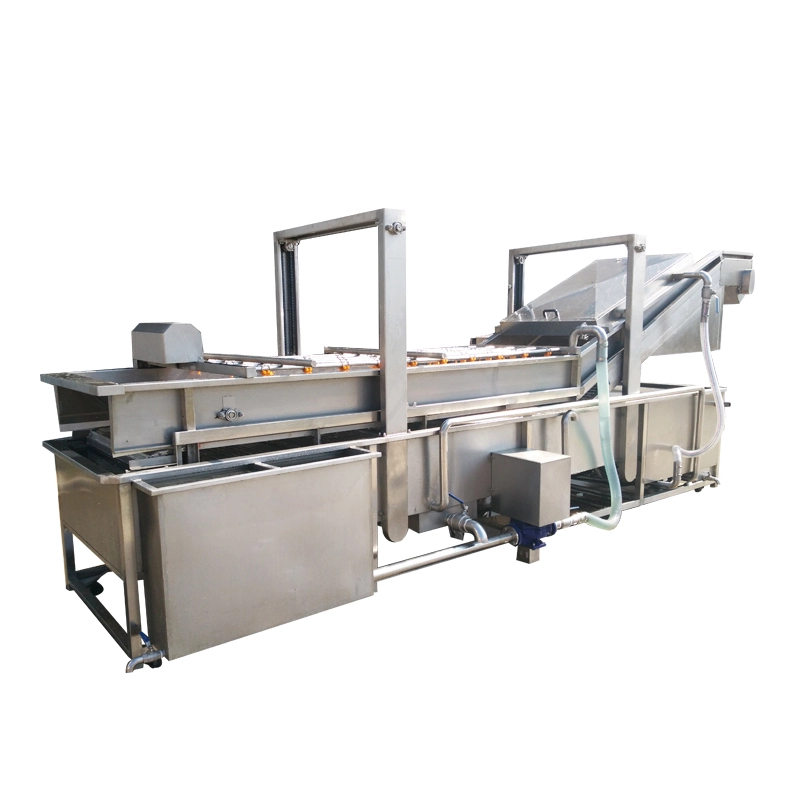
- Tank system: Made of 304 stainless steel with a thickness of 1.2–1.5 mm, it is corrosion-resistant and complies with food hygiene standards. The tank can be designed with an inclined structure or fitted with a conveyor belt for continuous operation.
- Power system: A vortex air pump of 2.2–3 kW generates high-pressure air, while a 0.75–1.5 kW circulating water pump maintains dynamic water flow. The conveyor belt adopts frequency conversion speed regulation with an adjustable speed of 1–10 m/min to adapt to different material residence times.
- Filtration device: Multi-layer filters trap impurities; some models are equipped with an automatic residue discharge system, reducing the frequency of manual cleaning.
2. Innovative Design
- Modular expansion: It can be fitted with brushes, rotating drums and drying modules to form a complete production line, such as washing → impurity removal → drying.
- Intelligent temperature control: An optional heating element can raise the water temperature to around 40 ℃, enhancing the degreasing effect, which is suitable for cleaning pickled products and similar materials.
Application Scenarios:
1. Fruit and Vegetable Cleaning
- Leafy vegetables (spinach, lettuce): Gentle bubble agitation with a breakage rate ≤3%.
- Root vegetables (carrots, potatoes): The brush module helps remove surface dirt and improves surface smoothness.
- Fruits (red dates, apples): Cleans impurities from surface crevices while preserving the original color.
2. Seafood Processing
- Shellfish (clams, razor clams): Bubbles simulate the natural sand-expelling environment, boosting efficiency up to five times.
- Fish: Removes surface mucus while keeping the flesh tender.
3. Special Material Cleaning
- Traditional Chinese medicinal herbs (goji berries, licorice): Removes impurities from folds while retaining active medicinal ingredients.
- Desalination of pickled products: Adopts circulating water rinsing, with salinity precisely controlled within ±0.5%.
Main Advantages:
1. High Efficiency and Superior Cleaning Performance
- Pesticide residue removal rate ≥ 90%, mud and sand impurity removal rate up to 99%. Its efficiency is three times higher than manual cleaning.
- Water recycling rate reaches 80%; water consumption per ton of materials is only 0.1–0.3 tons, achieving 80% water savings.
2. Low Damage Rate
- Gentle bubble cleaning ensures a breakage rate controlled within ≤3% for delicate materials such as strawberries, and ≤5% for root vegetables.
3. Energy Saving and Environmental Friendliness
- Energy consumption stands at 0.5–1.2 kWh per ton of raw materials, lower than traditional cleaning methods.
- Complies with export food hygiene standards and reduces the use of chemical cleaning agents.
4. Flexible Operation
- Adjustable conveyor belt speed adapts to the cleaning requirements of different materials.
- Modular design supports functional expansion, such as adding disinfection and drying modules.
Operation and Maintenance:
1. Operating Procedures
- Check the integrity of all equipment components, then open the water inlet valve until the water reaches the overflow level.
- Start the blower, circulating water pump and conveyor belt, then load the materials manually or by lifting equipment.
- Adjust the conveyor belt speed and circulating water pump pressure according to the material type to ensure thorough cleaning.
- After cleaning, rinse the materials with pressurized water and filter them before proceeding to the next process.
2. Maintenance Points
- Clean the filter regularly to prevent blockage by impurities.
- Inspect the aeration system to ensure bubbles evenly cover the bottom of the tank.
- Clean the inner tank wall to avoid dirt accumulation in corners and crevices.
- Lubricate the conveyor belt reducer regularly to extend its service life.
Purchase Recommendations:
1. Material and Specifications
- Priority should be given to a 304 stainless steel tank body with a thickness of no less than 1.2 mm, featuring strong corrosion resistance.
- Choose equipment length specifications (such as 4 meters or 6 meters) according to production capacity requirements, with an output ranging from 1 to 5 tons per hour.
2. Functional Configuration
- For cleaning delicate materials, select the model equipped with a brush module.
- For scenarios with high hygiene requirements, opt for models with an automatic residue discharge system and intelligent temperature control system.



 Chat Now

 Message

 Email
Email
