
PRODUCTS>Brush Roller Cleaning and Peeling Machine

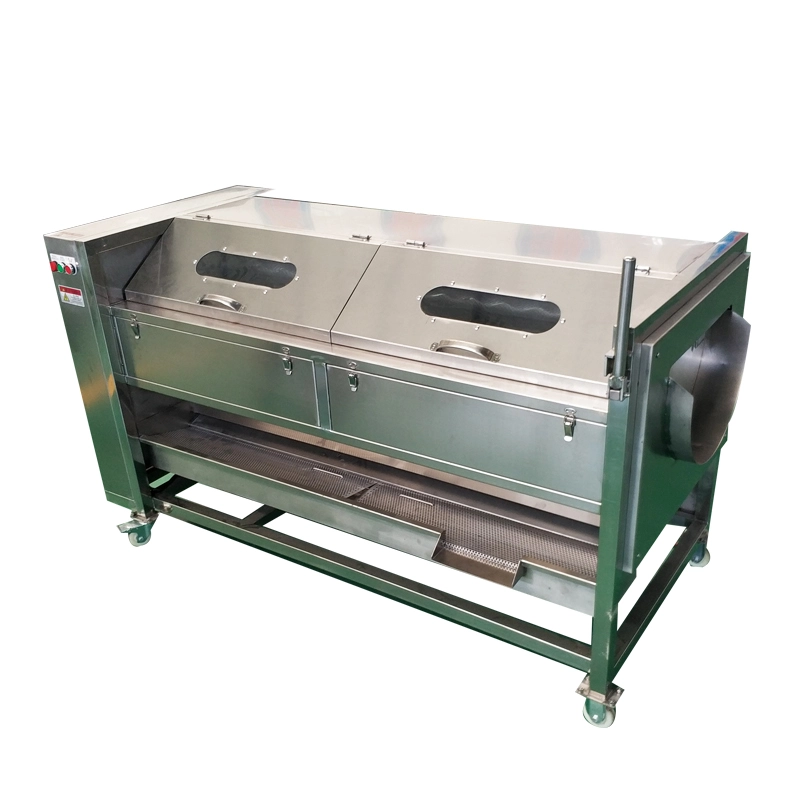
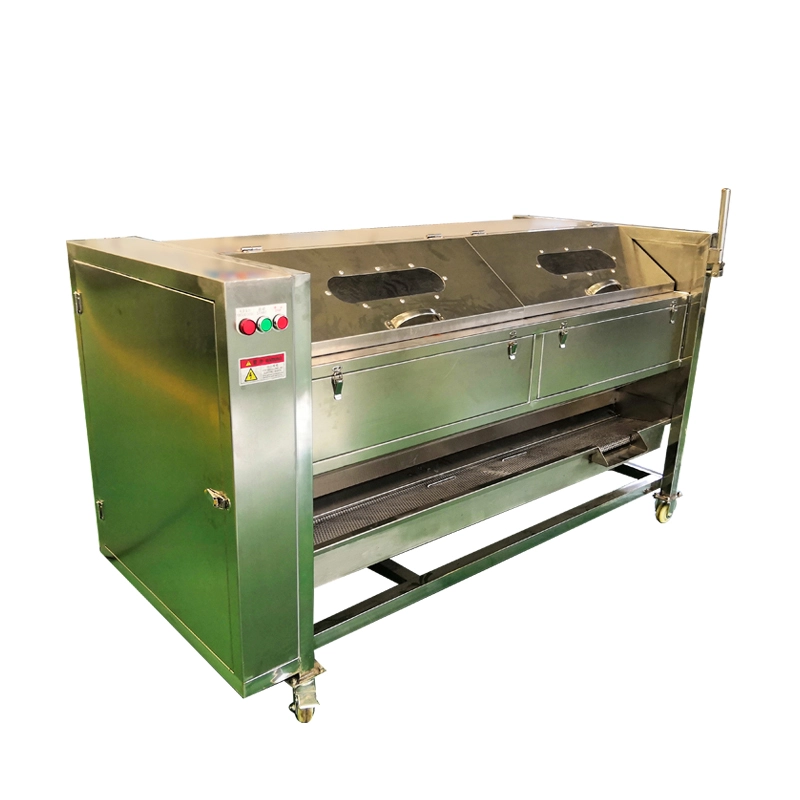
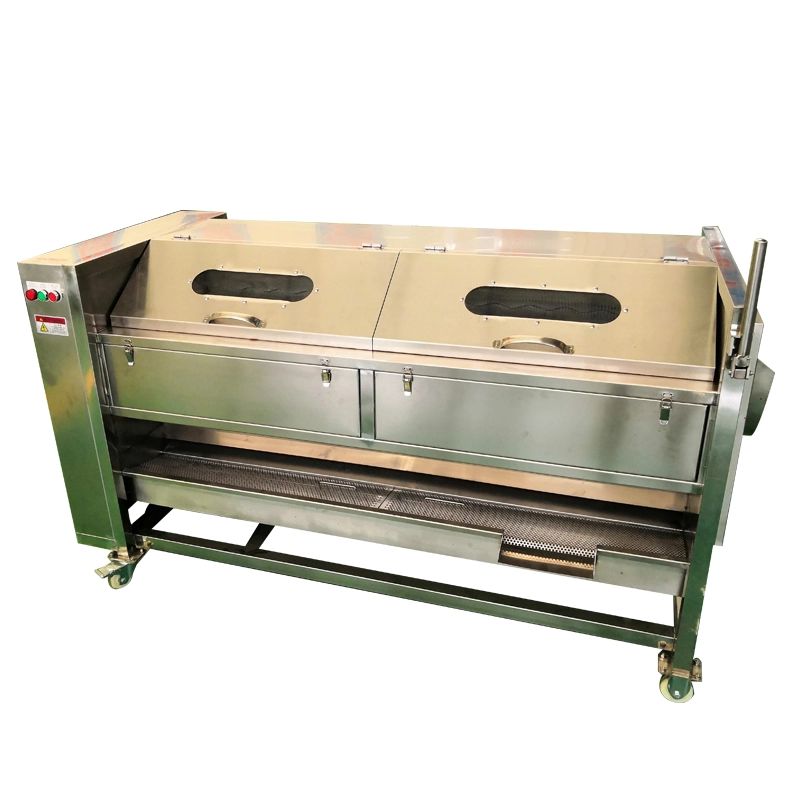
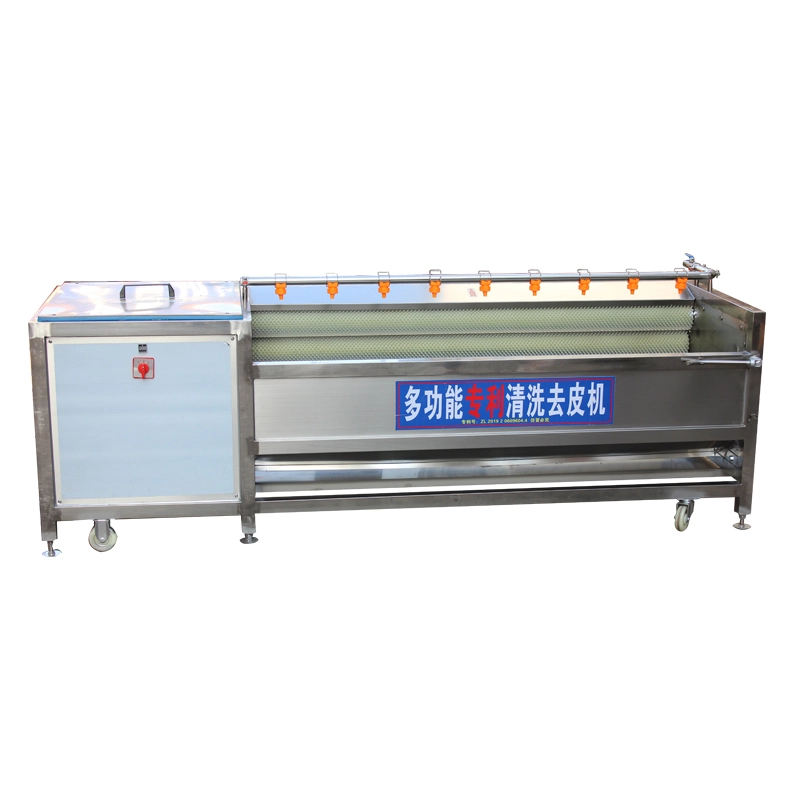
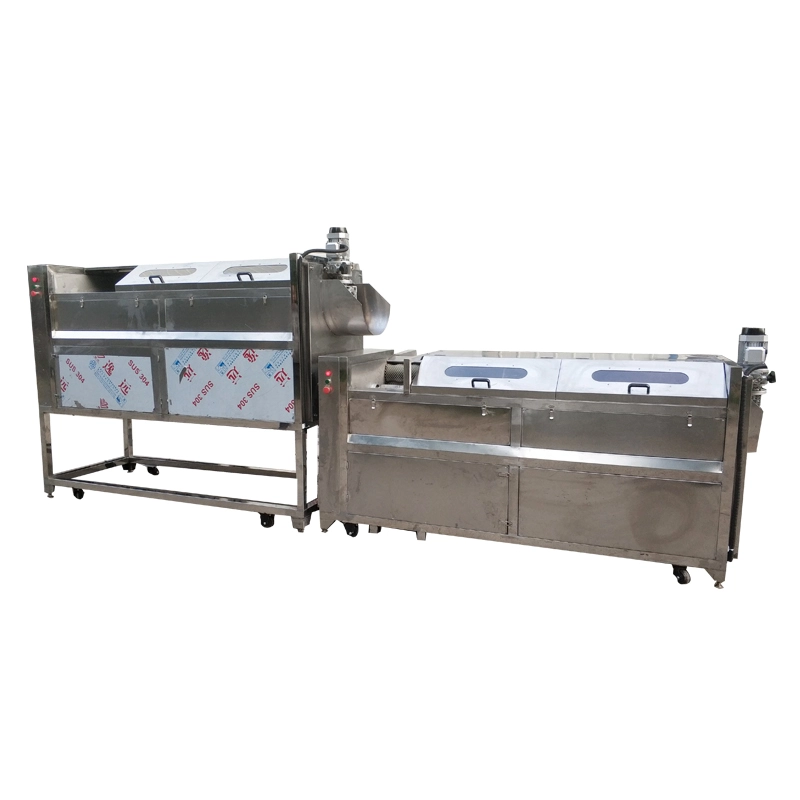
Brush Roller Cleaning and Peeling Machine

The brush roller washing and peeling machine achieves the following functions through the friction between rotating rollers and materials, combined with high-pressure water spraying:
• Washing: Removes mud, impurities and pesticide residues from the surface of root vegetables (such as potatoes, carrots and sweet potatoes), fruits (such as apples and pears), and some aquatic products (such as snails and clams).
• Peeling: Hard bristle rollers rub off the skin of materials such as potatoes and taro directly, simplifying the processing procedure.
Polishing: Soft bristle rollers can be used to polish and wax fruits (such as kiwis and peaches) to improve their appearance.

Product Introduction

Working Principle:

  • Brush roller friction: A motor drives multiple sets of parallel brush rollers to rotate synchronously. The brushes make contact with the material surface and remove dirt or peel by rolling friction.
  • High-pressure spraying: The spraying system continuously ejects fan-shaped water jets to wash away detached mud, sand, peel scraps and other impurities, achieving a dual cleaning effect of friction and rinsing.
  • Continuous discharging: As the brush rollers rotate, cleaned materials are automatically conveyed to the discharge outlet, realizing continuous production operation.


Structural Composition:

  • Roller assembly: The core working component consists of 8 to 13 parallel rollers. The surface is covered with elastic bristles such as nylon brushes, featuring good wear resistance and anti-deformation performance.
  • Power system: A motor drives the rollers via chain or belt transmission. The speed is adjustable to adapt to different raw materials.
  • Washing tank and water supply system: A washing tank is arranged at the bottom, equipped with spray or immersion water supply devices to continuously provide clean water.
  • Transmission and adjustment mechanism: Includes a speed controller and roller spacing adjuster, allowing parameter tuning according to the size and hardness of raw materials.
  • Waste discharge and collection system: A drain outlet at the bottom of the washing tank quickly discharges wastewater and impurities. A discharge port at the machine end collects cleaned materials.

Technical Characteristics:

  • High efficiency and low energy consumption: Compared with manual cleaning, its efficiency is 5 to 10 times higher with relatively lower energy consumption, making it ideal for large-scale production.
  • Thorough cleaning: The combined action of brush friction and water flow removes dirt and sand from the crevices of raw materials, achieving a cleaning effect far better than manual washing.
  • Material protection: The soft and flexible brush material avoids scratching the surface of raw products and keeps them intact.
  • Easy operation: The machine can adapt to different raw materials simply by adjusting the rotation speed and roller spacing, without complicated operation steps.
  • Long service life: The core brush rollers are specially treated for excellent wear resistance; the stainless steel body is corrosion-resistant and ensures prolonged service life.

Application Scenarios:

  • Food processing plants: Used for washing and peeling tubers and fruits such as potatoes, carrots and apples.
  • Pre-processed vegetable distribution centers: Applied in vegetable preprocessing to improve overall processing efficiency.
  • Catering industry: Employed to clean raw ingredients and semi-finished food products, meeting large-scale processing demands.
  • Aquatic product processing: Suitable for cleaning seafood such as snails and clams to remove mud and impurities.

Types and Selection:

1.Classification by function

  • Simple cleaning: Focuses on removing dirt while preserving the skin of food materials.
  • Combined cleaning and peeling: Achieves simultaneous cleaning and light peeling by increasing the friction of the bristles.
2.Classification by size
  • Small models: Compact in size with low processing capacity, ideal for small workshops and restaurant kitchens.
  • Industrial models: Featured with large capacity and high automation, suitable for large-scale production in food processing plants.
3.Selection considerations
  • Capacity matching: Select equipment specifications according to daily processing volume.
  • Brush hardness: Hard bristles are used for peeling, and soft bristles are used for cleaning or polishing.
  • Material requirements: Prioritize stainless steel machine bodies and food-grade nylon brushes to comply with hygiene standards.

Maintenance and Care:

  • Daily cleaning: Clean the brush rollers, cleaning tank and drain outlet every day to avoid blockage caused by residues.
  • Regular inspection: Inspect the motor, chains and belts monthly to check for wear and looseness.
  • Brush replacement: Replace the brushes regularly according to service frequency to maintain stable cleaning efficiency.
  • Professional maintenance: The manufacturer provides comprehensive maintenance every six months, including cleaning the brush roller pipelines and calibrating the transmission system.
`
Products
Contacts
WhatsApp
Email