
PRODUCTS>Crate Washer

Crate Washer

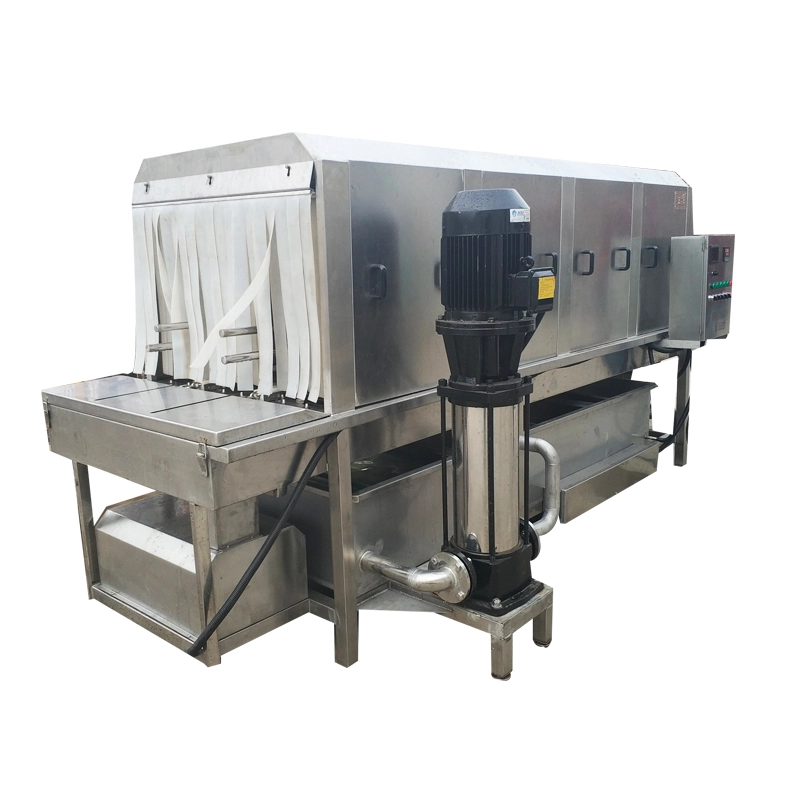
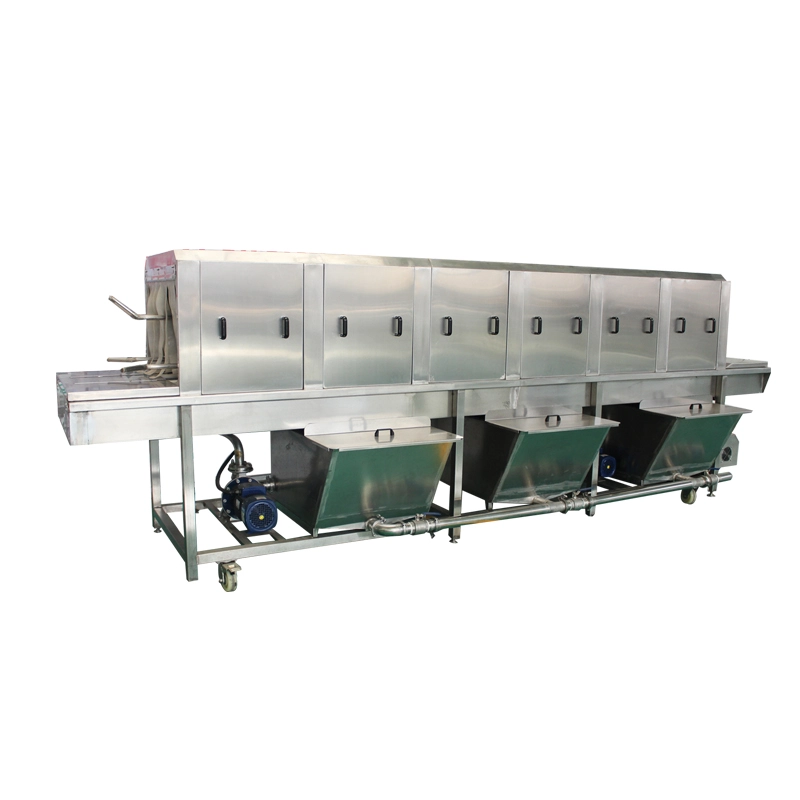
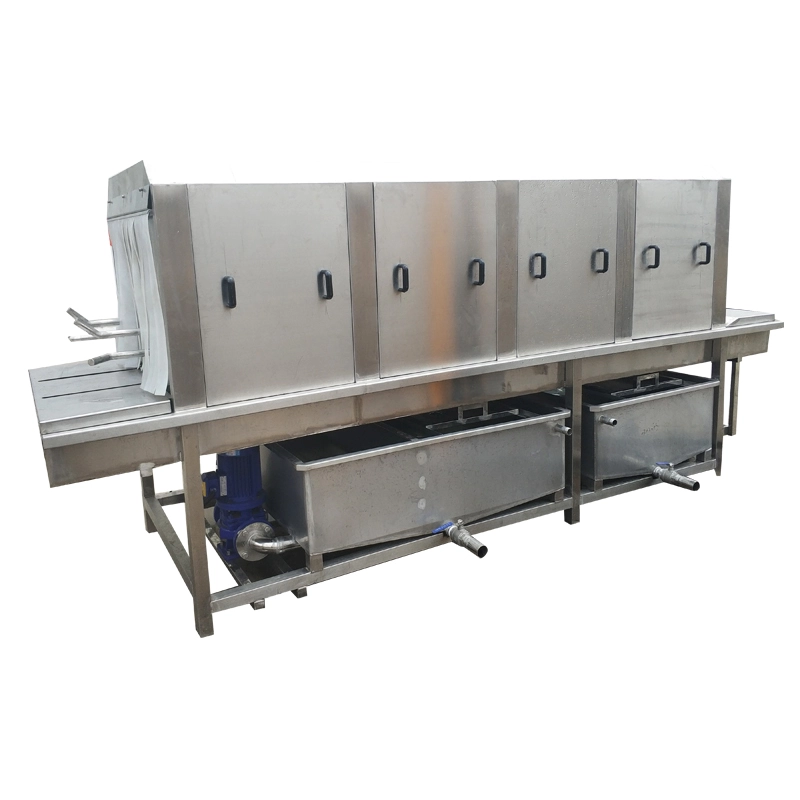
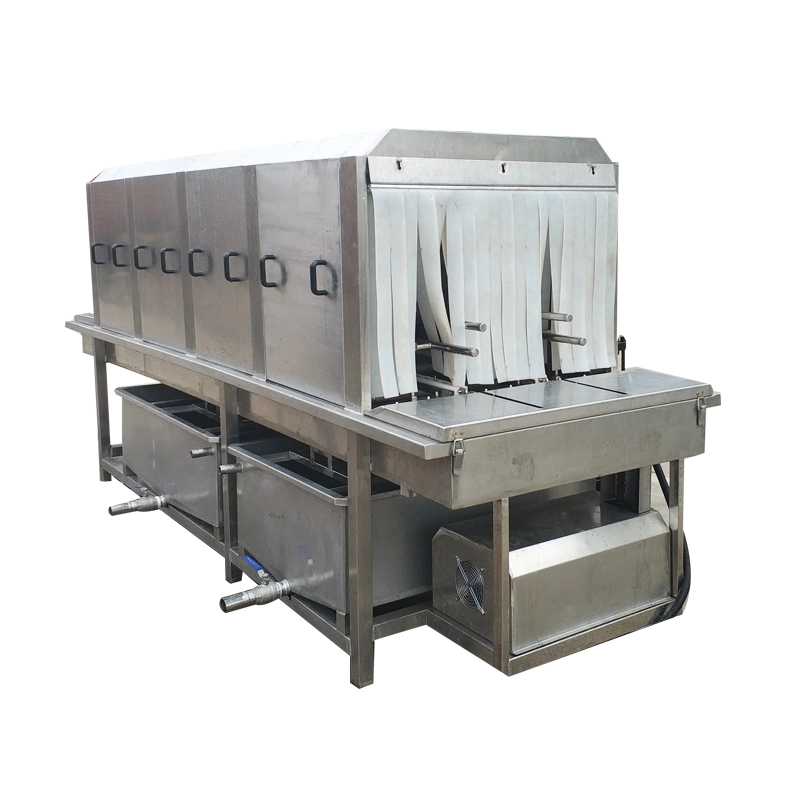
A crate washer is an automated container cleaning device that replaces manual labor. It is mainly used to clean various reusable containers such as boxes, pallets and other types of receptacles. Its main functions include:
• High-efficiency cleaning: Adopting high-pressure spraying and brushing technologies, it quickly removes dirt, oil and residues from the surface of crates.
• Deep cleaning: It supports multiple cleaning processes (including hot alkaline water spraying, hot water rinsing and clean water rinsing) to ensure a high standard of cleanliness.
• Sterilization and disinfection: Some models are equipped with a disinfectant spraying section to eliminate bacteria and viruses on crate surfaces, meeting hygiene requirements in the food, healthcare and other industries.
• Drying function: An optional drying section with hot air circulation is available to rapidly remove surface moisture from crates and avoid secondary contamination.

Product Introduction

Working Principle:

  • High-pressure spraying: A water pump circulates hot water from the water tank to the spray pipelines. High-pressure water jets are ejected from nozzles to rinse the surface of the crate.
  • Brush washing: After hot alkaline water spraying, brushes are used to scrub the sides and bottom of the crate for improved cleaning performance.
  • Multi-stage cleaning: The equipment usually consists of a hot alkaline water spraying section, a brush washing section, a hot water spraying section, a clean water rinsing section, a disinfectant spraying section, and a drying section, ensuring thorough cleaning of crates.
  • Circulating filtration: Each circulating water tank adopts a stainless steel centrifugal pump for water spraying and is fitted with a filtration device, which facilitates dirt removal and achieves water saving.


Structural Composition

The crate washer is mainly composed of the following parts:
  • Frame structure: The main frame supporting the entire equipment, made of 304 stainless steel, featuring corrosion resistance and compliance with hygiene standards.
  • Conveyor belt: Used to transport crates, ensuring continuous movement inside the machine for automated cleaning.
  • Spray nozzles: Installed in four directions — top, bottom, left and right. The nozzles are made of heat-resistant plastic with quick-release design and fan-shaped spray, ensuring full and even water coverage.
  • Water tanks: Includes a hot alkaline water tank, hot water tank, clean water tank and disinfectant water tank, used to store water for each cleaning stage.
  • Water pump: Adopts a horizontal stainless steel centrifugal pump to provide high-pressure water flow for effective cleaning.
  • Motor: Drives the operation of the conveyor belt and rotating brushes to realize automatic crate cleaning.
  • Heating system: The alkaline water tank and hot water tank are equipped with steam or electric heating pipelines, with automatic water temperature control adjustable from ambient temperature up to 80 ℃.


Technical Characteristics:

  • High efficiency and energy saving: The high-pressure spraying and circulating filtration system saves water and energy, reducing cleaning costs.
  • Thorough cleaning: Multi-stage cleaning processes and brushing technology ensure no residues remain on crate surfaces, achieving a high standard of cleanliness.
  • Easy operation: Adjustable running speed and temperature, paired with an intuitive interface, allowing operators to master the equipment quickly.
  • Safe and reliable: Waterproof design and a stable electrical system minimize operational risks.
  • Convenient maintenance: Each water tank is fitted with an independent drain valve for easy cleaning and upkeep; the adjustable brush design extends service life.

Application Scenarios

Crate washers are widely used in the following industries:
  • Food processing: Used to clean crates for vegetables, fruits, meat, baked goods and other food products, ensuring food hygiene and safety.
  • Logistics and transportation: Applied to clean transit crates, preventing cross-contamination and improving logistics efficiency.
  • Catering services: Used for cleaning tableware crates in restaurants, hotels and other catering venues, enhancing tableware cleanliness and safeguarding customer safety.
  • Agriculture and animal husbandry: Suitable for washing feed containers, egg trays and other livestock supplies, avoiding the spread of diseases.
  • Supermarkets: Employed to clean shelf containers, shopping baskets and other supermarket supplies, improving the sanitation of the shopping environment.


Types and Selection

1.Classification by function

  • Standard cleaning: Cleaning only; suitable for scenarios with low hygiene requirements.
  • Cleaning and sterilization: Equipped with sterilization function; suitable for the food, medical and related industries.
  • Cleaning and drying: Built-in drying function to prevent secondary contamination of crates; ideal for occasions with high drying standards.
  • Cleaning, sterilization and drying: Integrates cleaning, sterilization and drying into one complete unit; suitable for environments with strict hygiene standards.

2.Classification by heating method

  • Electric heating: Uses electric heating elements to heat the water tank; suitable for sites with sufficient power supply and relatively low energy consumption.
  • Steam heating: Adopts steam heating coils to heat the water tank; suitable for factories with steam supply and large daily cleaning volume.

3.Selection considerations

  • Capacity matching: Choose equipment specifications according to average daily cleaning output to ensure it meets production demands.
  • Crate specifications: Select a suitable crate washer based on the size, shape and material of the crates, ensuring smooth conveying and thorough cleaning inside the machine.
  • Cleaning requirements: Choose the right model and functional configuration according to expected cleaning results, sterilization effect and drying standards.
  • Energy consumption and cost: Evaluate the equipment’s power consumption, water consumption and maintenance costs, and select a cost-effective model.

Maintenance and Care:

  • To ensure normal operation and extend the service life of the crate washer, the following maintenance tasks should be performed regularly:
  • Cleaning of internal and external parts:Regularly remove dirt and residues inside the equipment to keep it hygienic; clean dust and debris on the exterior as well to ensure good heat dissipation.
  • Inspection of spraying and brushing systems:Periodically check spray pipes and nozzles for blockages or damage to guarantee uniform water spraying; inspect brushes for wear and looseness, and adjust or replace them in a timely manner.
  • Inspection of electrical and transmission systems:Check electrical wiring regularly for looseness or aging to ensure electrical safety; examine transmission belts and chains for wear and slack, and adjust or replace them promptly.
  • Cleaning of water tanks and filters:Regularly clear dirt and sediment from water tanks to maintain clean water quality; clean residual impurities on filters to ensure efficient filtration performance.
  • Heating system inspection:Routinely check heating elements for damage or aging to keep the system working properly; verify the accuracy and reliability of the temperature control device, and calibrate or replace it when necessary.
`
Products
Contacts
WhatsApp
Email